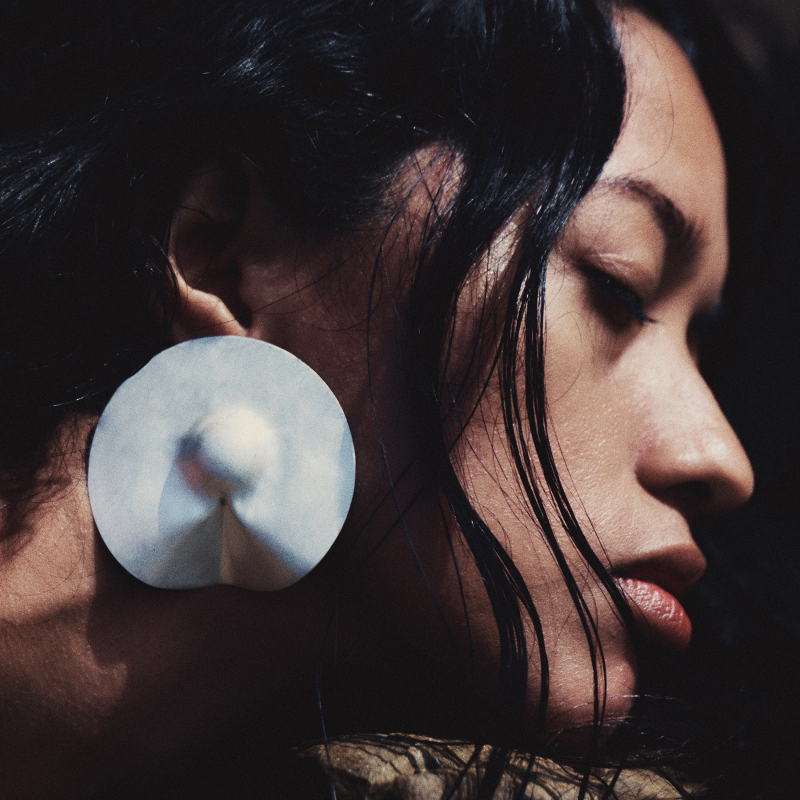
Across cultures and centuries, the objects worn closest to the body have rarely been purely decorative. They have marked identity, channeled belief, and connected the wearer to forces beyond the visible.
In conversation with Jakhu Studio founder and designer Maria, MMW Journal explores how the studio sits within this lineage and how Maria translates that weight of meaning into a contemporary practice that asks what jewellery, stripped of ornament, is actually for.
Long before jewellery became a consumer object, purchased, layered, and exchanged, the objects people chose to wear on their bodies carried meaning that had little to do with appearance. Across pre-Columbian and Peruvian cultures, metalwork was not primarily a matter of beauty. It was a matter of connection, to the body, to the natural world, to systems of knowledge embedded in material and form. Jakhu Studio, founded by Maria, exists in dialogue with that lineage. Not as an act of preservation, but as a practice built through years of research and making, a slow process of understanding what these objects were actually doing, and why that still matters.
On a trip to Lima, Maria found a silver ring in a market, nothing dramatic, nothing sought out, but something about it shifted her. She returned to Spain carrying the ring and an idea that hadn't fully formed. When she returned to Peru, she was introduced to a family of metalworkers in the Andes, and began making pieces she would wear herself. "The brand built itself," she says. "It was not planned."
Pre-Columbian and Peruvian civilizations held a specific and sophisticated relationship to precious metals. Metals such as gold, silver, and copper, were associated with the natural environment, assigned symbolic value corresponding to their colors, luminescence, and sounds. In the Andean worldview, the world was organised around relationships between complementary opposites: male and female, day and night, sun and moon. Gold was associated with daylight and the sun, silver with night and the moon. In Inca cosmology more specifically, gold was the sweat of Inti, the solar deity; silver the tears of Mama Quilla, goddess of the moon and regulator of women's menstrual cycles. When the two metals were combined within a single object, that union was understood to produce a microcosm, a balance between opposites held within one piece.
The geometric dimension of this tradition is equally significant. Heather Lechtman, a leading academic researcher on pre-Hispanic Andean metallurgy, has argued that Andean value systems fundamentally shaped technological choices; how something was made was inseparable from what it meant (Technology and Culture, 1984). Visual language in these cultures operated through geometric abstraction: tiny sheets of metal bearing symbolic images were attached to objects to produce both sound and movement, while forms like the chakana, the stepped Andean cross, encoded relationships between celestial and terrestrial worlds. Geometry here was not a stylistic preference. It was a means of describing how the universe was structured, and the object a way of wearing that structure on the body.
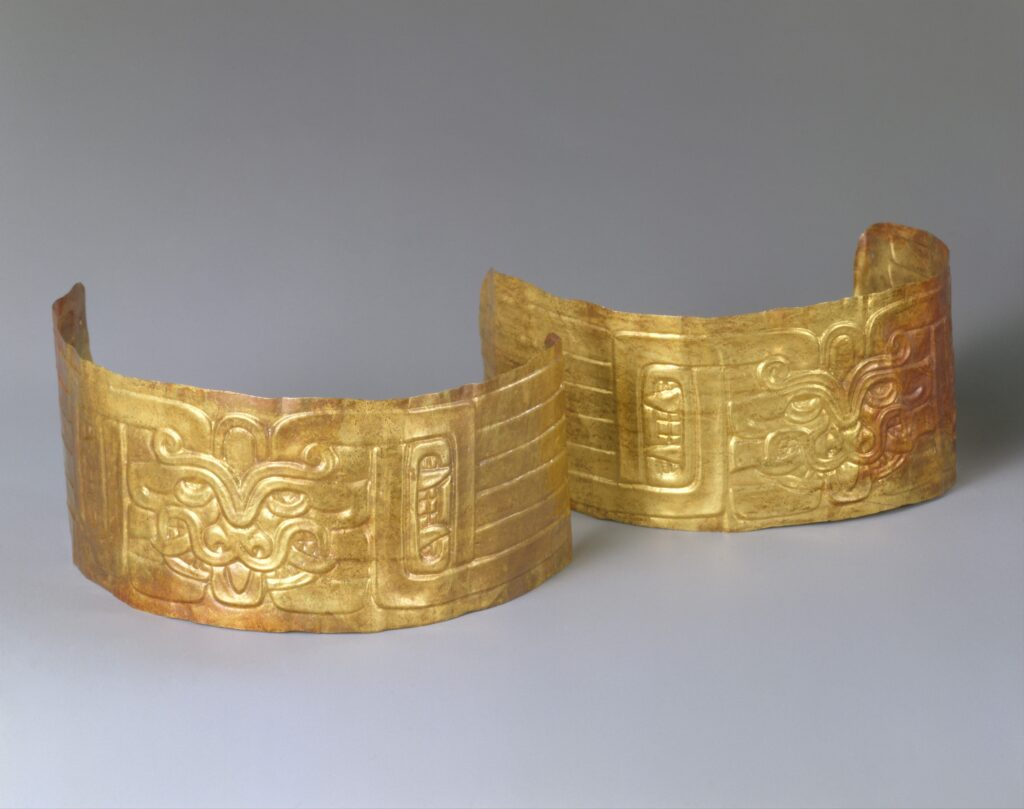
Arm bands, Chavín artist(s), 800–500 BCE
Patricia A. Lagarde, Andrew W. Mellon Fellow, January 2021
Maria works in dialogue with this lineage with deliberate care. She describes arriving at it slowly, through years of research, making, and learning, and is clear that the process remains ongoing; each return to Peru, each conversation, each new encounter with pre-Columbian and contemporary Andean culture, continues to deepen and complicate her understanding. What she continues to encounter is a coherent philosophy about the relationship between material, body, and invisible force.
Her exclusive use of silver is partly intuitive; she describes it as quiet, feminine, deep and partly structural. Silver is one of the most electrically conductive metals. The body communicates through bioelectric impulses, and these material properties have deepened her thinking about the relationship between silver and the body. Maria connects this directly to how she thinks about wearing it: the body communicates through bioelectric impulses, and the interaction between a highly conductive metal and the skin is not, she argues, purely symbolic. Ancient Columbian and Peruvian metalworkers used rattles and resonant objects in ceremony; artists reproduced sounds found in the natural world through metal, having different pieces strike one another. The sound of metal was understood as a pathway to the divine; a form of transmission, not merely decoration.
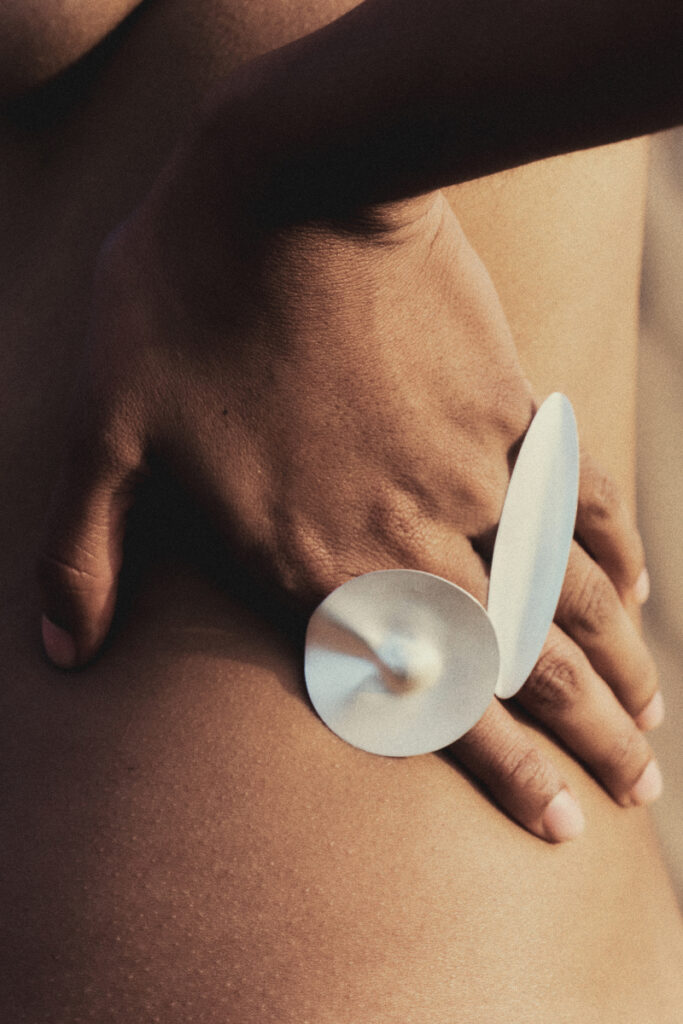
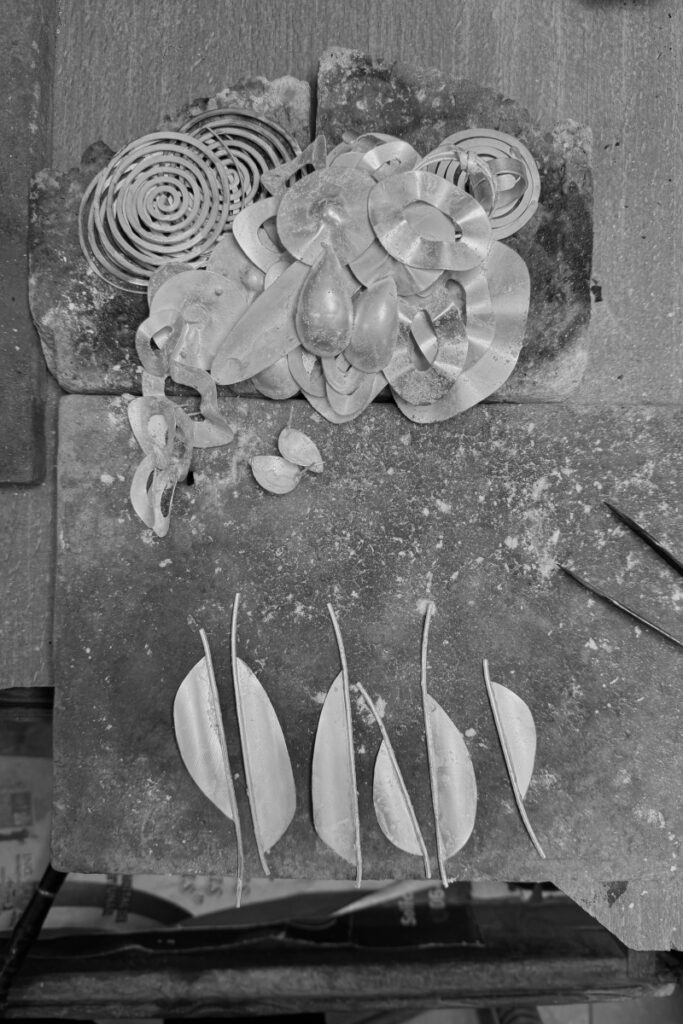

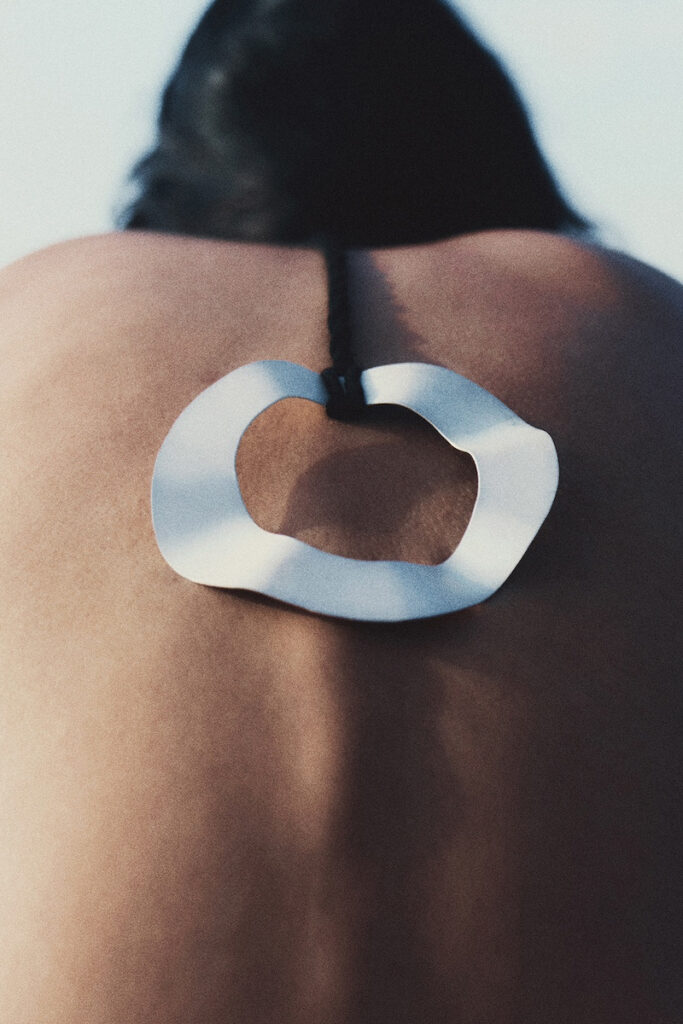
The pieces are made by hand with the artisan family in the Andes, where silversmithing has been passed down across generations. Maria uses the Greek word 'Meraki' to describe what distinguishes a piece with soul from one without; the quality of a maker's energy absorbed into an object through the act of making. Mass production, she argues, can produce beauty without it.
What she wants the wearer of Jakhu to receive is hard to name precisely. Protection. Groundedness. A form of connection to something not immediately visible. She recalls a woman in London who purchased a ring without any knowledge of Jakhu's references, and later wrote to say it had accompanied her through a personal transformation that she had felt, without knowing why, protected. It is this account that most clearly articulates the premise underlying her work: that the meaning embedded in an object through its history, its making, and its material does not depend on the wearer's awareness of any of it.
That may be the central argument of Jakhu's work: that meaning does not require context to function. That an object shaped by specific histories, made by specific hands, worn close to the skin, can transmit something without explanation. It raises a question worth sitting with about what we reach for when we put something on, and what we imagine, or quietly hope, it might do.
References & Further Reading
Lechtman, H. "Andean Value Systems and the Development of Prehistoric Metallurgy." Technology and Culture 25, no. 1 (1984): 1–36.
Lechtman, H. "PreColumbian Surface Metallurgy." Scientific American 250 (1984): 56–63.
Vetter Parodi, L. "Metalworking in Andean Communities of the First Millennium CE." The Metropolitan Museum of Art, 2024. metmuseum.org
"Ancient Andean Metalworking (900–1532 CE)." The Metropolitan Museum of Art. metmuseum.org
Smarthistory. "Ancient Colombian Goldmaking." smarthistory.org
"Mama Quilla." Encyclopædia Britannica. britannica.com
Emmerich, A. Sweat of the Sun and Tears of the Moon: Gold and Silver in Pre-Columbian Art. University of Washington Press, 1965.