What does sustainability look like when it moves beyond commitments and into practice? Through its partnership with the One Planet Network, MMW Collective explores how global sustainability frameworks can connect with the realities of creative industries, offering brands practical tools, shared knowledge, and new ways of creating value.
The following article draws on a conversation with the One Planet Network (OPN) hosted by the United Nations Environment Programme (UNEP) and the UNEP Textiles Initiative.
The One Planet Network
Fashion is one of the largest industries in the world. It employs hundreds of millions of people, generates trillions in annual revenue, and exerts a cultural influence that extends well beyond the objects it produces. It shapes aspiration, identity, belonging. It tells us, in ways both explicit and quiet, what the future might look like.
It also accounts for up to 4% of global carbon emissions (McKinsey & Company and Global Fashion Agenda, 2011). It is among the largest consumers of fresh water on the planet (UNEP, 2025). It generates vast quantities of textile waste from consumers, as well as during production, and operates supply chains of extraordinary complexity, chains that, more often than not, resist the kind of transparency that accountability requires (UNEP, 2024). These are not marginal concerns, nor are they unique to the industry's largest players. They are structural features of fashion as it currently exists: an industry that many within the creative sector are part of, in different ways and at different scales.
The question is not whether to reckon with this reality. It's how, and with whom.
The One Planet Network, hosted by the United Nations Environment Programme, is a global platform established to advance SDG 12 of the United Nations' 2030 Agenda: the goal to achieve responsible consumption and production. Built to implement the UN's 10-Year Framework of Programmes on Sustainable Consumption and Production, it brings together governments, businesses, civil society, researchers, and international organisations around a shared ambition: translating sustainability goals into practical action across sectors and industries.
What distinguishes it is precisely this layered approach. The Network describes itself, "as operating both at the policy level and at the level of real-world implementation" functioning as a collaborative ecosystem rather than a single programme or solely an ambition.
Its thematic programmes span across consumer information, food systems, tourism, buildings and construction, public procurement, and sustainable lifestyles. Across all of them, the underlying logic is the same: that sustainable development requires not only technological innovation, but a broader shift in systems, incentives, and behaviours. The goal, stated simply, is to bridge what so often remains a gap: turning sustainability from a high-level objective into coordinated action that can influence markets, behaviours, and policy environments simultaneously.
From Frameworks to Tools
Within that architecture, specific initiatives work give form to frameworks that would otherwise remain abstract.
Retail4Impact, convened by OPN's Consumer Information Programme, is one. It recognises the leverage that retailers and brands hold over supply chains and consumer behaviour, and it creates a structured space for collaboration and accountability on product sustainability information. Brands that join commit to improving the credibility, transparency, and reliability of the sustainability claims they make to consumers, aligning their communications with the UNEP Guidelines for Providing Product Sustainability Information.
In practice, business members of the initiative develop a two-year roadmap for strengthening sustainability information over time; access to workshops, peer exchange, and collaboration with certification bodies, research institutions, and NGOs. OPN notes the ambition is clear: "participation signals a willingness to align with internationally recognised sustainability standards and to engage in measurable action rather than purely aspirational messaging." Retail4Impact is not a badge. It is a commitment that requires transformational work.
The Sustainable Fashion Communication Playbook, developed by the UN Environment Programme and the Fashion Industry Charter for Climate Action, convened by UN Climate Change works in adjacent territory. It addresses a dimension that technical frameworks often leave untouched: the role of language, narrative, representation, and storytelling in shaping how people understand information. "In possessing one of the most powerful marketing engines on earth, fashion shapes the very notion of desire and aspiration. The role of influence and the subsequent impact communication has on its consumption sits at the heart of what the Playbook addresses."
Together, these tools carry the same underlying argument. Sustainability transitions are not only about changing products or technologies. They require changing narratives, incentives, and behaviours across the entire ecosystem. Fashion and the wider creative industries occupy a specific position within this conversation; one that carries both weight and possibility. They don't simply respond to culture. They produce it. They shape what people desire, what they aspire to, what they consider worth keeping. And historically, parts of the industry have used that power to accelerate cycles of disposability: normalising volume over value, marketing newness as virtue, and showing how quickly products become waste.
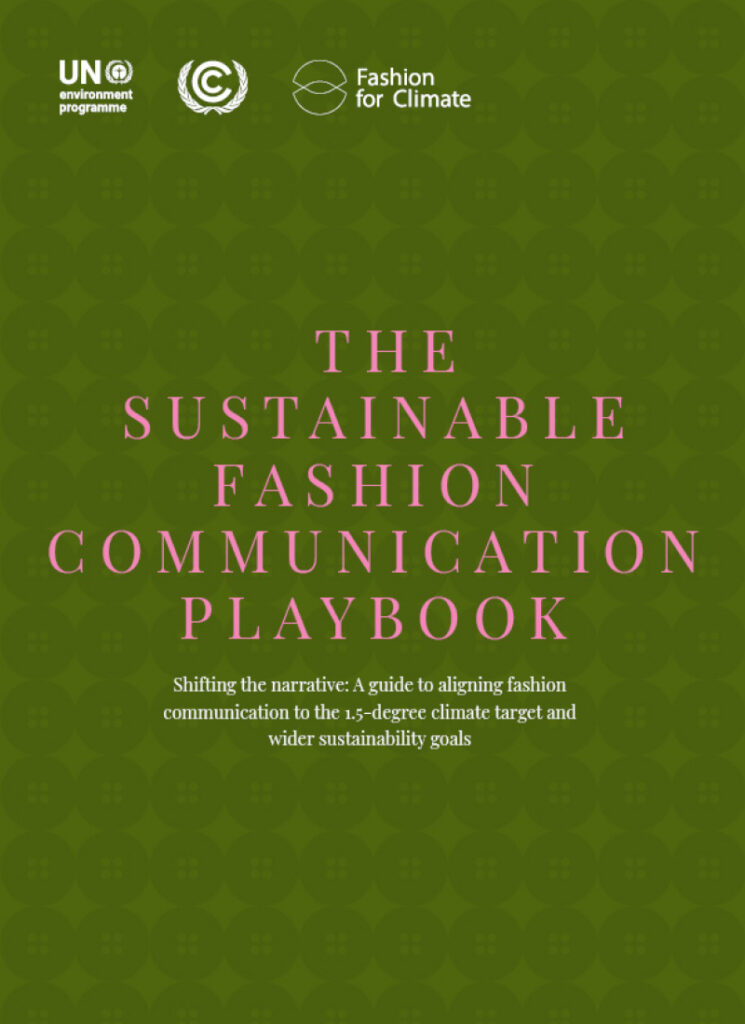
The Fashion Sustainable Communication Playbook
United Nations Environment Programme (2019)
Shaping Behaviour
But the same cultural machinery that contributed to those patterns can begin to dismantle them. The Playbook recognizes that "fashion communication, when directed the right way, can use its cultural reach, powers of persuasion and educational role to both raise awareness and drive a shift towards a more sustainable and equitable industry."
This is why the creative industries matter to sustainability in a way that goes beyond their environmental footprint. Sustainability transitions are not driven by policy and technology alone. They require people to be able to imagine, and to desire, different ways of living, consuming, and expressing themselves. The creative sector has a unique ability to make new ways of living feel relevant, attractive, and possible. That is not a minor contribution. In many respects, it may be one of the most significant ones available.
What becomes possible, when brands stop treating sustainability as a messaging layer and begin integrating it into the creative process itself, into design choices, sourcing decisions, storytelling, business models is a different kind of practice altogether. One where sustainability stops being reactive and becomes a source of innovation and differentiation. Not a constraint placed on creativity, but a condition that sharpens it.
Before frameworks become genuinely useful, something else typically has to move. The most common starting point for brands entering sustainability conversations is the search for a tool: a certification, a reporting framework, a communications approach. These have their place. But they tend to work best once a more fundamental shift has already occurred: from understanding sustainability as a compliance or communications tool to recognising it as something more strategic. The real turning point, as OPN describes it, comes "when brands begin to see themselves not as isolated companies optimising around the edges, but as actors within interconnected systems; supply chains, consumer behaviours, policy environments, ecosystems, and communities."
Only then do the practical tools begin to create meaningful change and drive significant value. The One Planet Network echoes this:"Frameworks, metrics, and roadmaps are important, but they only create meaningful change when leadership is willing to embrace collaboration, transparency, and long-term thinking." This is also the philosophy at the core of the One Planet Network itself: that systemic challenges require collective, cross-sector solutions.
MMW Collective x OPN: A Partnership in Translation
Earlier this year, MMW Collective formalised a partnership with the One Planet Network: one that reflects a particular understanding of what creative industry platforms can do when they engage seriously with global sustainability frameworks.
The thinking behind it is a form of translation. Global sustainability frameworks operate at the level of policy, metrics, and systems. The creative industry operates through culture, emotion, storytelling, aesthetics, and behaviour. The challenge and the possibility is connecting those two in a way that makes sustainability tangible, desirable, and actionable for the brands navigating both. "Frameworks like those supported by the One Planet Network provide the structure and scientific grounding," OPN reflects, "but creative industries shape perception and influence behaviour at scale."
For partners within the MMW Collective network, what this partnership concretely opens is access to a collaborative ecosystem that extends well beyond any individual company's capacity. Joining the One Planet Network means entering a global community that includes governments, UN agencies, NGOs, researchers, and other businesses working on shared systemic challenges. The value is not only reputational; it is access to tools, methodologies, peer learning, working groups, and implementation frameworks that translate ambition into measurable action. Through Retail4Impact specifically, brands can engage in structured, accountable work on product sustainability information: moving from isolated internal commitments to active collective industry progress.
"No single company can solve systemic challenges alone," OPN reflects. "Collaborative platforms create spaces where businesses can move beyond isolated action and contribute to broader shifts in markets, behaviours, and norms."
The invitation is to see sustainability not as something separate from creativity, innovation, or growth, but as something that increasingly shapes them. Rather than being an added responsibility, it is becoming part of how businesses create, design, and grow. The One Planet Network sees it clearly: “The brands that will lead in the coming years are not necessarily those with the loudest claims, but those capable of rethinking how they create value: culturally, environmentally, and economically at once.”
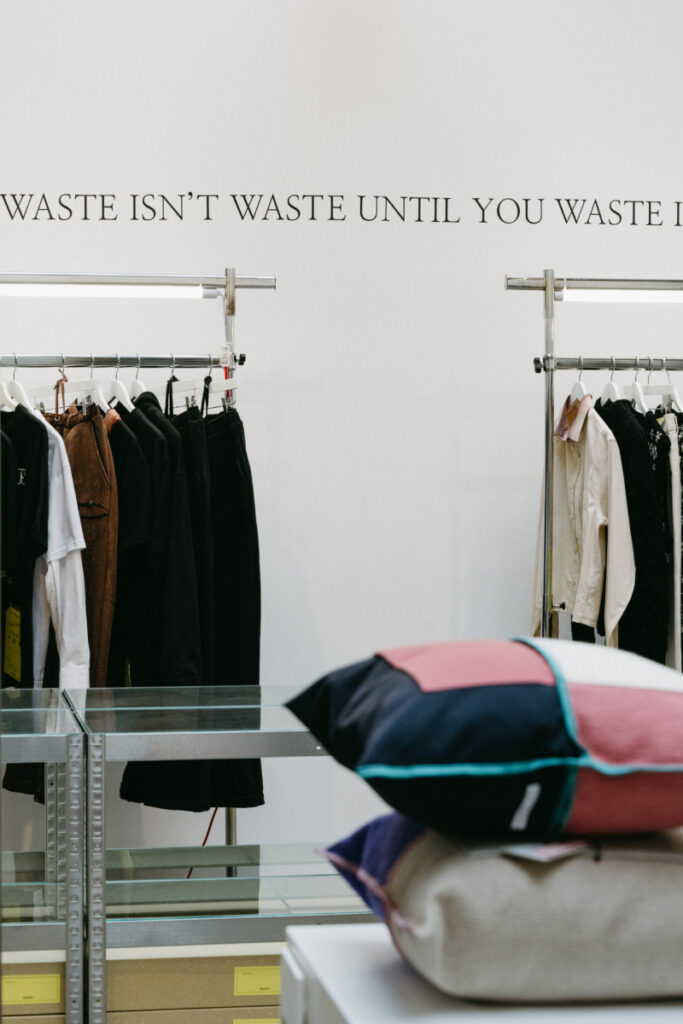
MMW Collective Showroom, Edition No.2
To join or learn more about the One Planet Network and Retail4Impact, visit oneplanetnetwork.org and oneplanetnetwork.org/retail4impact.
References & Further Reading
United Nations Environment Programme. Sustainable Fashion Communication Playbook. 2023. unep.org/resources/publication/sustainable-fashion-communication-playbook
International Desalination and Reuse Association. "Understanding the Fashion Water Footprint." IDRA, 2024. idrawater.org/news/understanding-the-fashion-water-footprint
United Nations Environment Programme. "Unsustainable Fashion and Textiles in Focus for International Day of Zero Waste 2025." UNEP Press Release, March 2025. unep.org/news-and-stories/press-release/unsustainable-fashion-and-textiles-focus-international-day-zero
United Nations Environment Programme. "Sustainable and Circular Textiles." UNEP. Accessed June 2026. unep.org/topics/chemicals-and-pollution-action/circularity-sectors/sustainable-and-circular-textiles