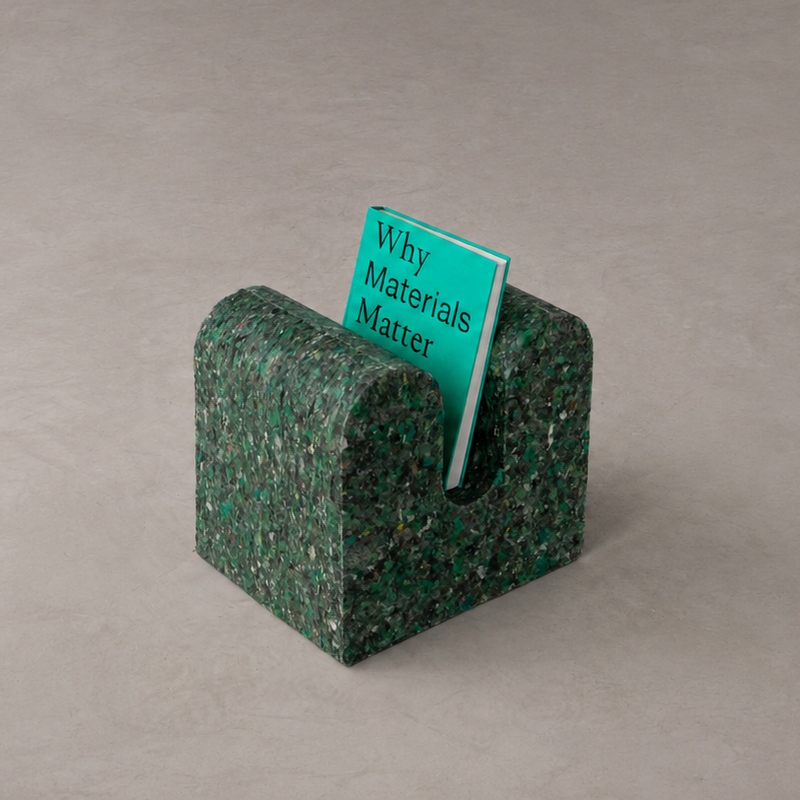
Value, it turns out, is a question of perception. In our latest In Residence, architect-turned-founder Clarisse Merlet and her Parisian studio FabBRICK reconstitute fashion's discarded textiles into a material for architecture and design and in doing so, reframe waste not as residue but as a resource that has merely lost its function. A meditation on matter, craft, and what it means to begin where another industry ends.
This article draws on a conversation with Clarisse Merlet, founder of FabBRICK. All quoted passages are drawn from that exchange.
FabBRICK
What happens when the end of one industry becomes the beginning of another?
Generally, fashion runs on a linear logic. Material moves from production to consumption to disposal, and rarely doubles back. Offcuts, unsold stock, worn-out fabric, all of it is treated as residue: simply what's left behind. FabBRICK begins at exactly the point where that system gives up. It takes the discarded textile and treats it not as an ending, but as raw material for something else entirely: a mineral-like substance for architecture and interior design.
The studio, founded in Paris by Clarisse Merlet, has transformed more than 80,000 kilograms of textiles into new material applications since 2018. But the most compelling figure is conceptual. FabBRICK is, at its core, an argument about value: about where it resides, and what we are willing to see.
A question that became a practice
FabBRICK began as Clarisse’s final-year project at architecture school. The project was born from a discomfort she couldn't quite set down. "I was questioning the environmental impact of the construction industry and looking for ways to design with materials that already existed around us," she recalls. The scale of textile waste, when she encountered it, was the catalyst. "I was shocked by how much usable material was being discarded every year."
What started as research became, almost against her intentions, a company. "I never planned to become an entrepreneur," she says. Following the presentation of her FabBRICKs, the interest came first: from companies, institutions, and designers wanting to use the material. Thus, the business followed, demanding an entirely new set of skills: building a team, finding funding, developing production processes. A steep learning curve, sustained by a single conviction: that the project could create real environmental impact.
Founding FabBRICK also changed how she sees the material at the centre of it all. "Today, I rarely think of waste as waste," she reflects. "I now see waste as a resource that has simply lost its function within a particular system." The problem, in other words, was never the material. "Most so-called waste still contains value. We just need to create the right processes and infrastructures to unlock it."
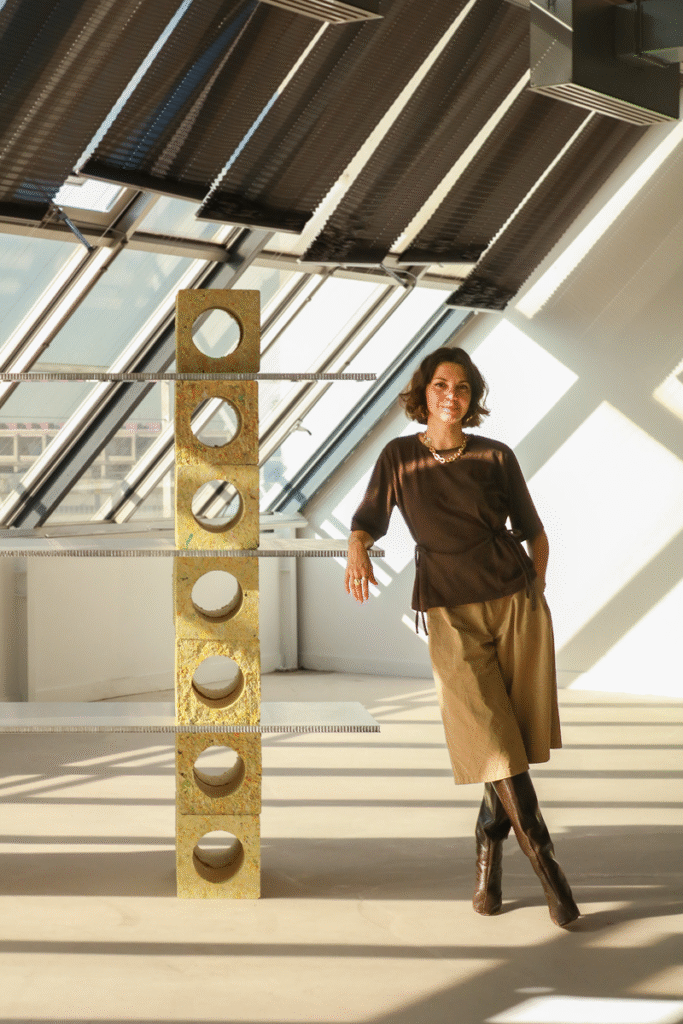
Clarisse Merlet, Founder FabBRICK
The life of a brick
The brick is where it all began, and it remains the foundation of everything FabBRICK makes. It is the form that gave the studio its name and first showed what the material could do: that a textile, broken down and rebuilt, could behave like a building material. Lightweight yet solid, with strong aesthetic and acoustic qualities, the brick looks mineral but is, in fact, fabric.
The process behind it is deliberate, and it begins with arrival. Textiles come in from official partners. They are sorted by colour, shredded into fibres, mixed with a proprietary bio-based binder, compressed into moulds, and left to dry for several days. What emerges is the material the studio builds everything else from suitable for interior architecture, scenography, furniture, and installation.
Nothing arrives clean or uniform, and FabBRICK does not pretend otherwise. The textiles come "through collection and sorting organisations across France," Clarisse explains, alongside clients' own materials, from fashion houses, hotels, and cultural institutions. As the studio has grown, sourcing has become easier, built on "a much deeper understanding of textiles and a well-established supply chain." Trust compounds with each project. "The more references we have, the more organisations feel confident partnering with us."
Material variability remains the most defining challenge. It is "probably the biggest challenge in our work," Merlet says, "but it is also what makes each project unique." The studio works with virtually any fibre blend, produces only on demand, and never keeps stock. Colour is the hardest variable to control, since no two batches are ever the same. Rather than engineering that inconsistency away, FabBRICK lets it remain. "Every batch retains traces of its previous life through its colours and textures, making each piece unique." The irregularity isn't a flaw to be managed. It's a signature.
That openness has produced genuine surprises, swimwear, ski boots, tennis balls, mattresses, tent fabrics, leather. The most unexpected was banknotes. "A manufacturer approached us with production offcuts from the banknote-making process. We tested the material, and it worked remarkably well." A wall installation made entirely from currency is now in development. "These unexpected experiments are often the most exciting part of our work," she says, "and continue to push our material research in new directions."
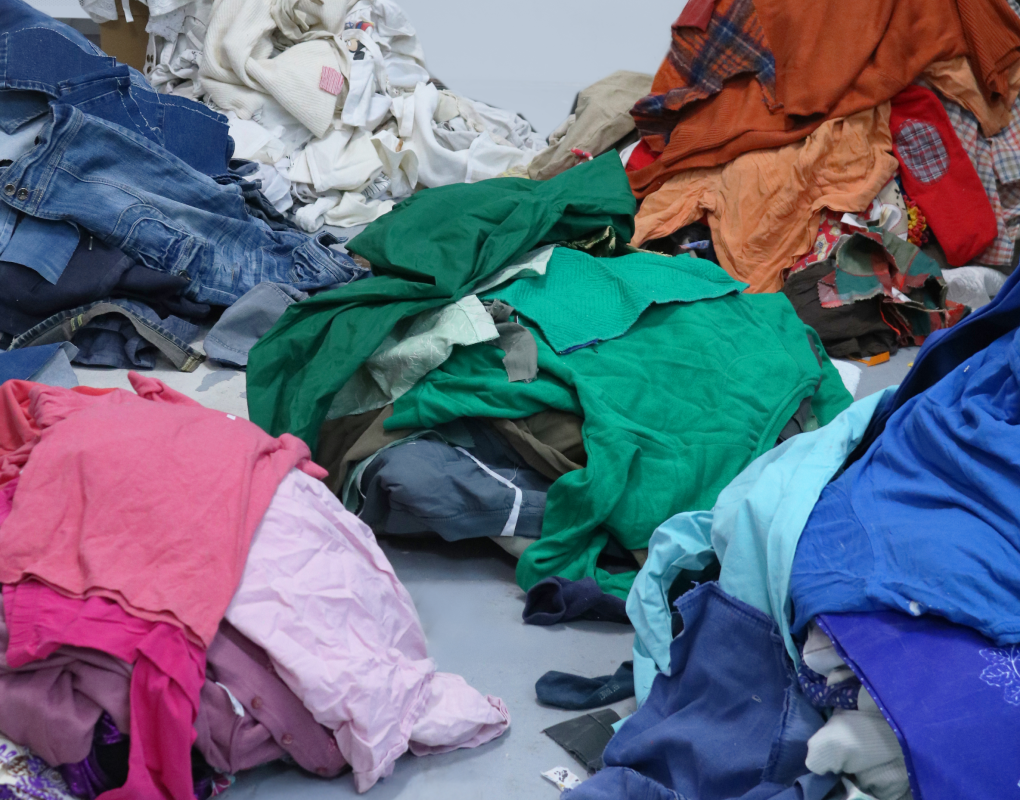
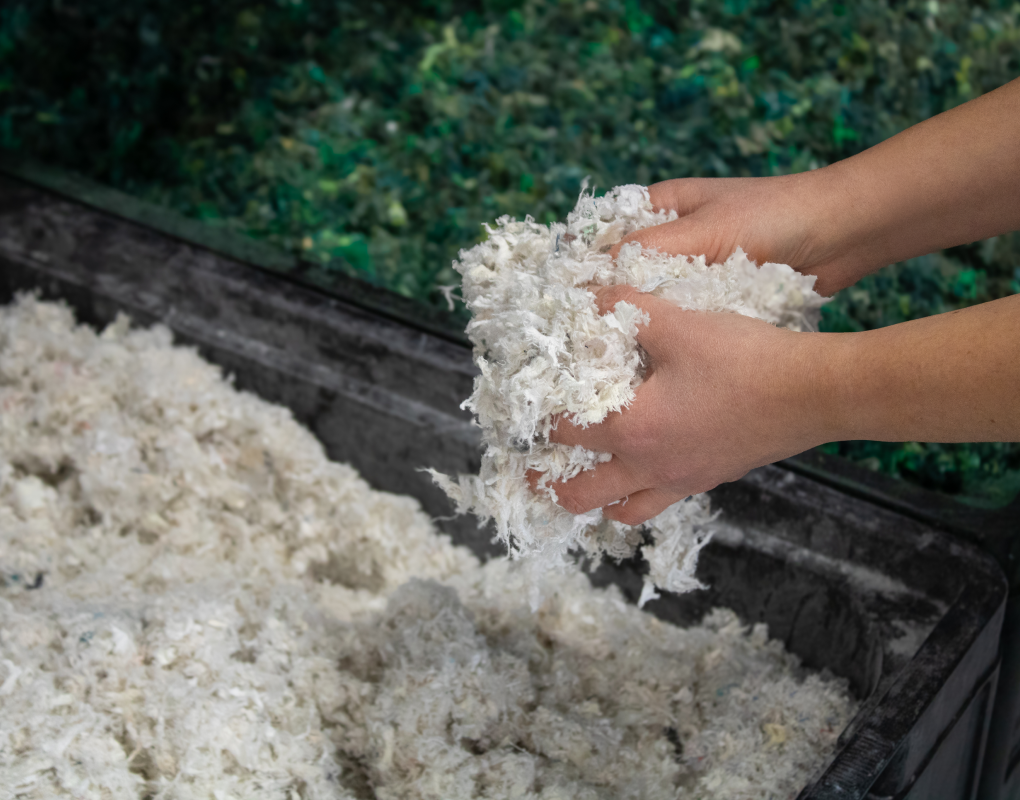
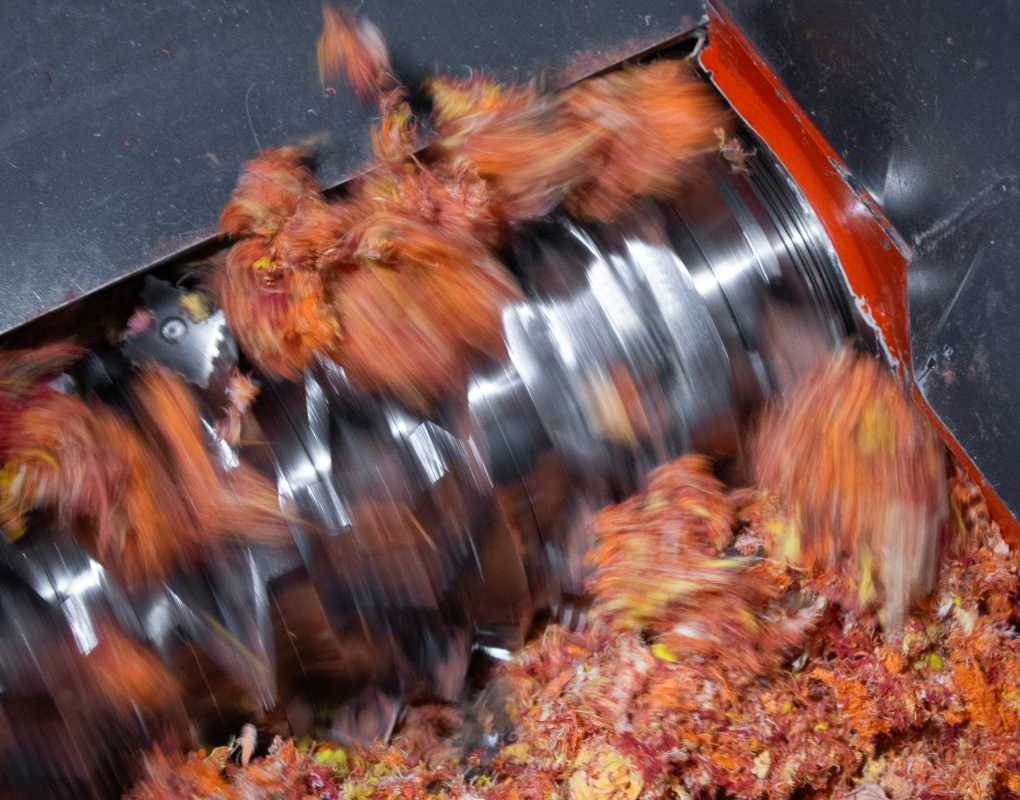
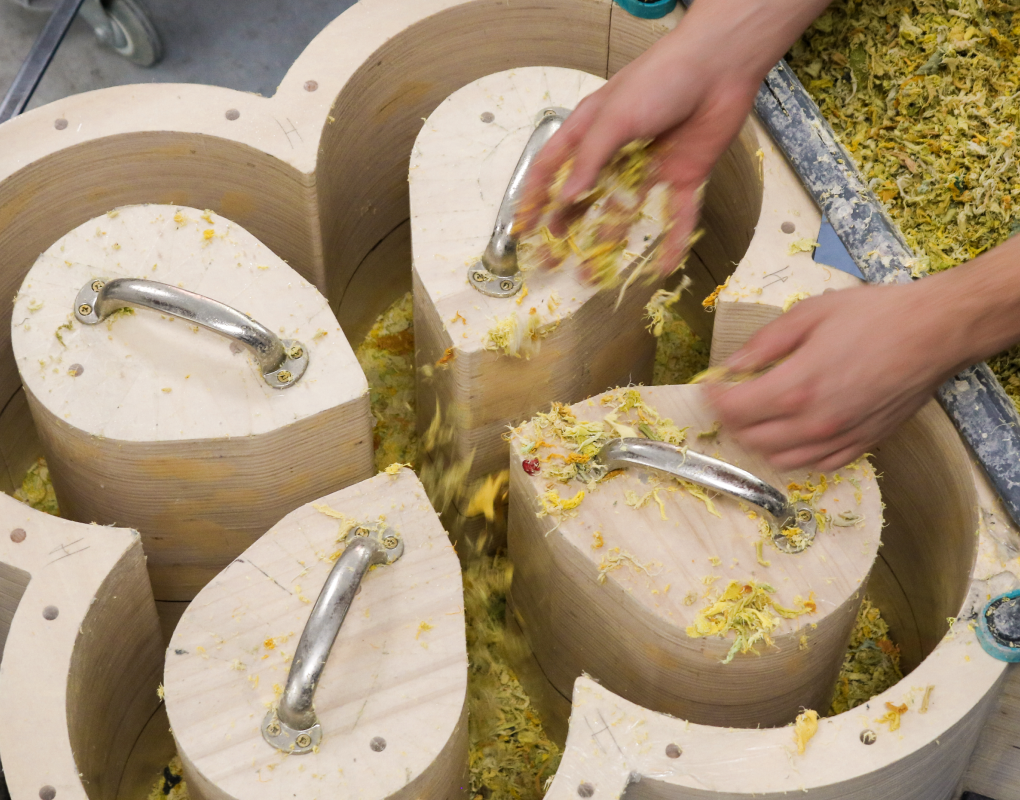
FabBRICK, Production
Beyond the brick
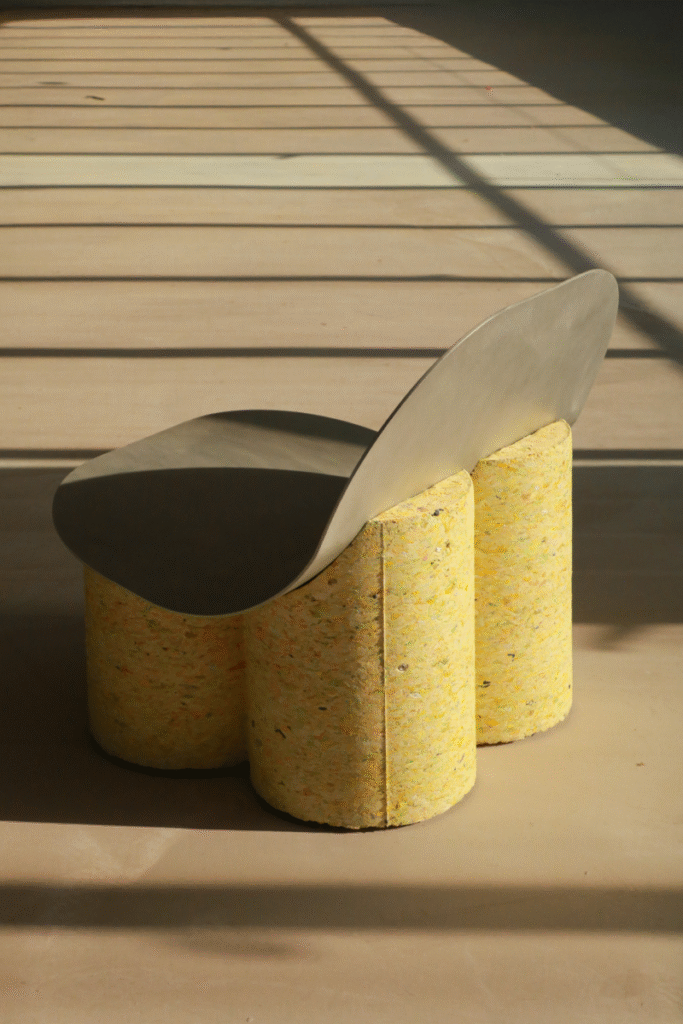
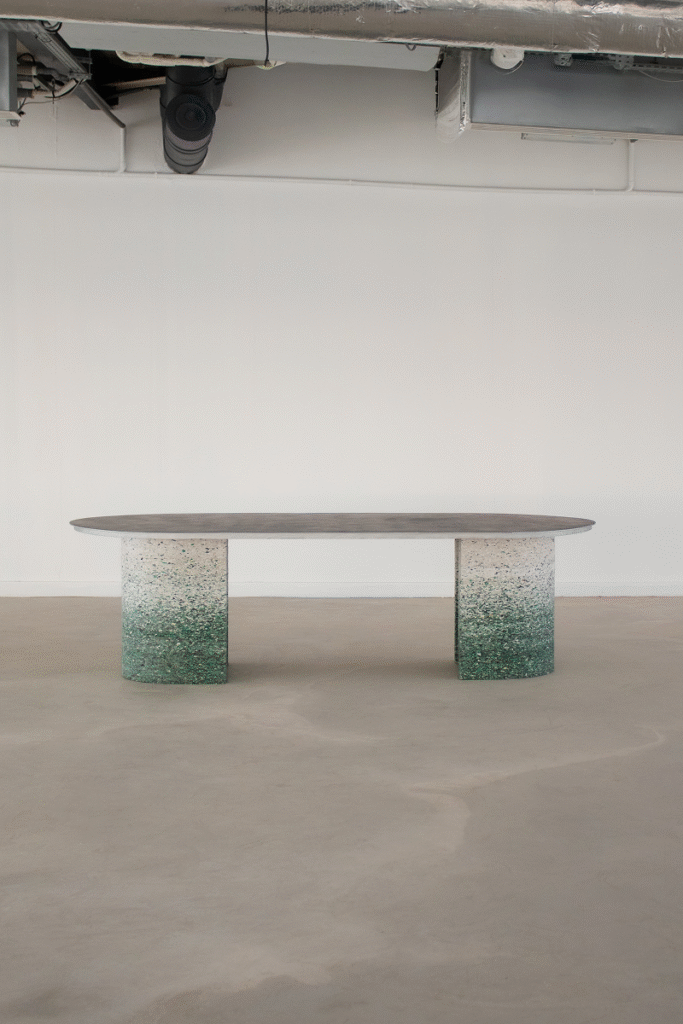
The furniture line, FabBRICK's newest direction, felt to Clarisse like "a natural evolution". It is a chance to move beyond the brick format into larger, more complex, organic shapes for the first time in eight years. The method inverts the usual design order. "The design process always starts with the material. Rather than imposing a form onto the material, we try to understand what it naturally allows us to create." Each collection begins with moodboards and atmospheres before moving towards sketches, and finally to the sorting of textiles into exact shades; the colour built, quite literally, from what comes through the door.
What she hopes people feel, encountering a piece, is something prior to understanding. "I hope it first creates an emotional response. I want people to react to the object itself, its shape, texture and presence, rather than immediately thinking about where the material comes from." Her first collection, nouvelle pierre (“new stone”) was so convincingly mineral that few guessed its origin. "I loved that confusion, and even more their surprise when I revealed their true origin." Every time someone sees stone before they see textile, she feels she's achieved her goal: letting the material be appreciated for its aesthetic qualities first.
For Clarrise, this is the whole point. Growth, she insists, "is not simply about increasing production volumes. It's about increasing impact": Making circular design the norm rather than the exception, and proving that environmental responsibility can be a driver of creativity rather than a constraint on it.
Where one industry ends, another can begin. FabBRICK finds the foundation in what others leave behind.
FabBRICK joins MMW Collective as Cultural Collaborator. The partnership launches during MMW Edition No.4, Paris Fashion Week SS27. Come see FabBRICK's furniture line on display in our space June 25th - 29th.
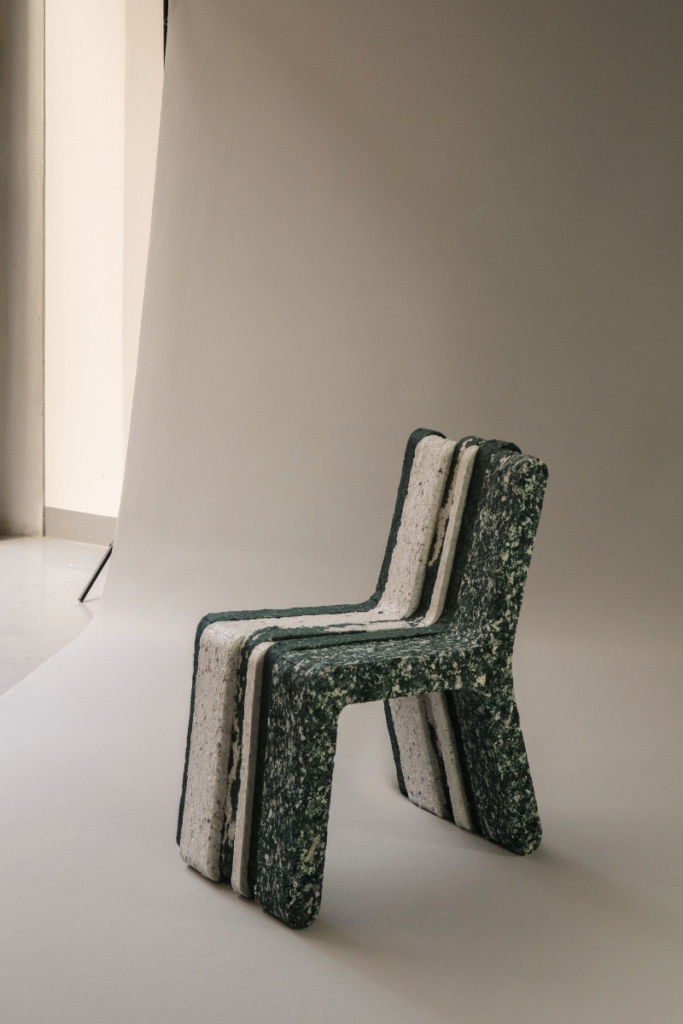
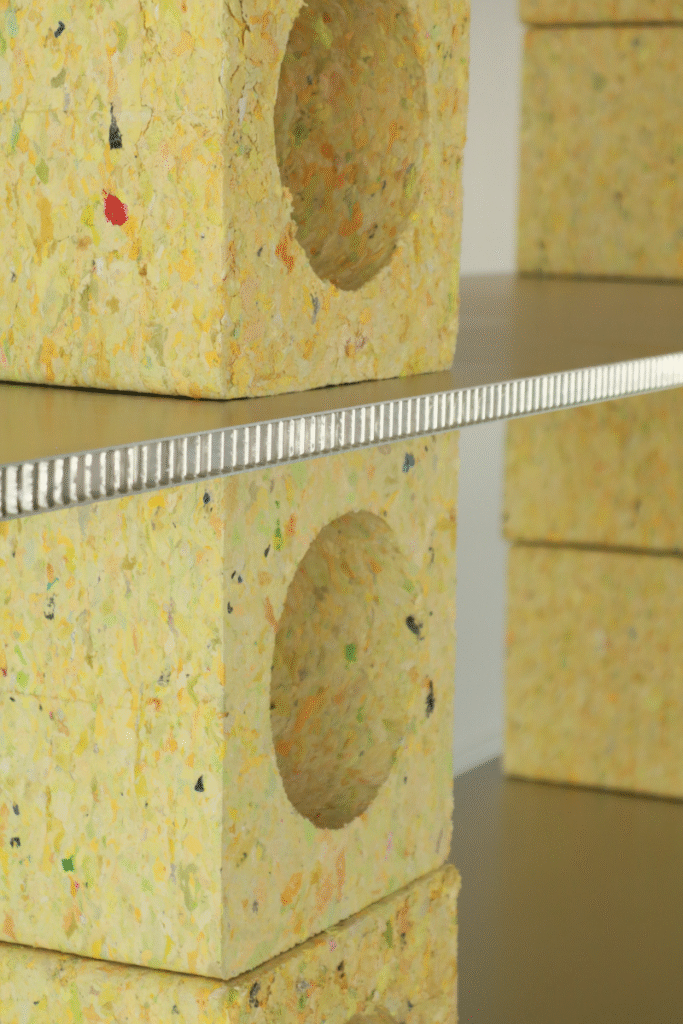
FabBRICK