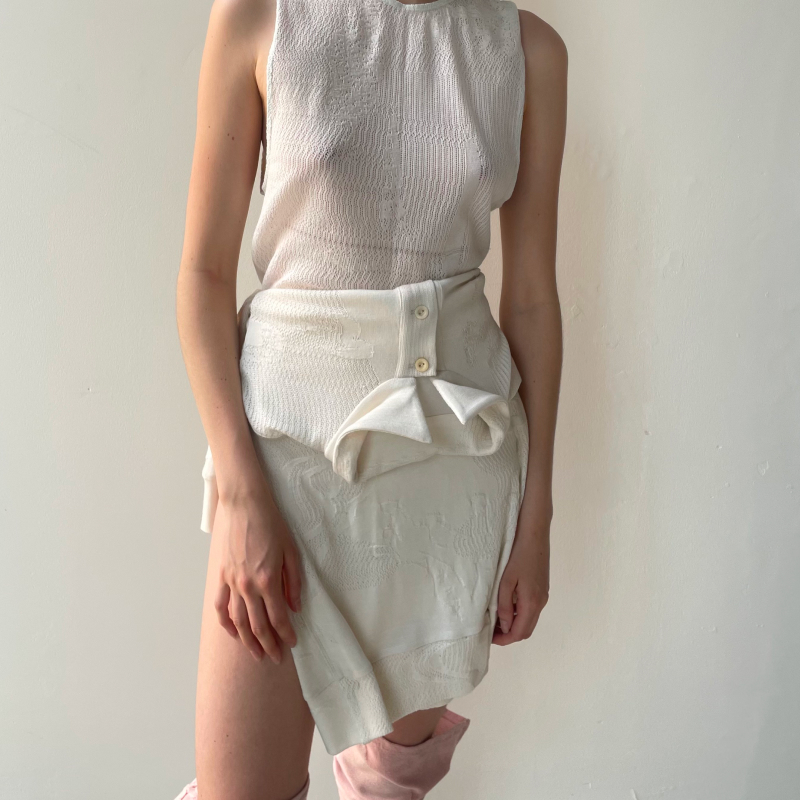
For Skin Series, textiles are not simply materials but living interfaces between the body and the environment. Combining textile design, microbiology, and material research, the project explores how garments can support the skin’s natural ecosystem. We spoke about the origins of this research, the development of probiotic textiles, and why the relationship between clothing and the body deserves closer attention.
Could you begin by introducing your background and how you first became interested in the relationship between textiles and the body?
I studied fashion at Westminster University, graduating in 2015, and began working in research and development within the sportswear industry. Early in my career, I worked with a cyclewear company, developing products for everyday road cyclists as well as professional athletes competing in events like the Tour de France.
Skin Series
Our focus was on performance through material innovation. We developed time-trial suits optimized for speed, experimented with color technologies for low-light visibility, and explored textiles that could improve comfort and endurance. The goal was always to enhance performance through fabric—making the rider faster, stronger, and more comfortable.
Later, I worked with a skiwear brand, where my role focused more on sustainability. That presented a very different challenge, as sportswear relies heavily on synthetic materials such as nylon and polyester, often combined with antibacterial treatments or waterproof finishes. None of these are particularly natural or sustainable, making innovation in that space quite demanding.
Through these experiences, I became increasingly interested in the relationship between the body and textiles, and how clothing can subtly influence the skin and overall well-being.
You later continued this exploration during your master’s at Central Saint Martins. How did that shape the direction of your work?
The Material Futures program encouraged a multidisciplinary approach and collaboration with experts outside of design. Students came from a variety of disciplines, and we were actively encouraged to work with scientists and researchers.
During my second year, I began collaborating with a skin microbiologist who was studying the skin microbiome—the ecosystem of bacteria that naturally lives on our skin. Much like the gut microbiome, these bacteria play an essential role in maintaining the body’s health.
Dr. Callewaert’s research focused specifically on odor control and how the microbiome could be manipulated to improve skin health. Interestingly, the research actually began with his own personal experience. He discovered that transferring a certain bacterium from another person’s skin eliminated his body odor problem. He eventually conducted clinical trials and developed what became known as a skin microbiome transplant.

Rosie Broadhead
That discovery seems to have sparked the core idea behind your textile research.
Exactly. I began wondering whether textiles themselves could act as the vehicle for microbiome transfer. Instead of laboratory swabs or medical procedures, textiles are already in constant contact with the body. Bacteria naturally move between our skin and the fabrics we wear. So the question became: could textiles be used as a mechanism to influence or improve the skin microbiome? This idea became the basis of my master’s project. I developed a prototype that I graduated with in 2019.
After graduating I moved to Belgium and began working at Ghent University as a textile scientist. The goal was to translate the concept into something technically viable. We developed a treatment that can be applied to textiles during manufacturing. It’s a liquid treatment that can be applied directly at the mill. You only need about five grams per square meter of fabric.
So the textiles actually contain living bacteria?
Yes. The bacteria are encapsulated in a bio-based capsule that protects them. The treatment is applied to the fabric in a way that is actually very similar to other finishing processes used in textile manufacturing. When the fabric rubs against the body, the capsules break and release the active bacteria onto the skin.
How long does the treatment remain active?
The treatment lasts for around thirty washes. However, the effects can sometimes extend beyond that because it influences the microbiome of the textile itself. Both skin and textiles have microbiomes that include a mix of beneficial and pathogenic bacteria. By introducing beneficial bacteria, it is possible to shift that balance. In some cases, that change can be relatively long-lasting.
In that sense, clothing becomes quite personal, because over time it accumulates your own skin cells and develops a microbial ecosystem that reflects the wearer.
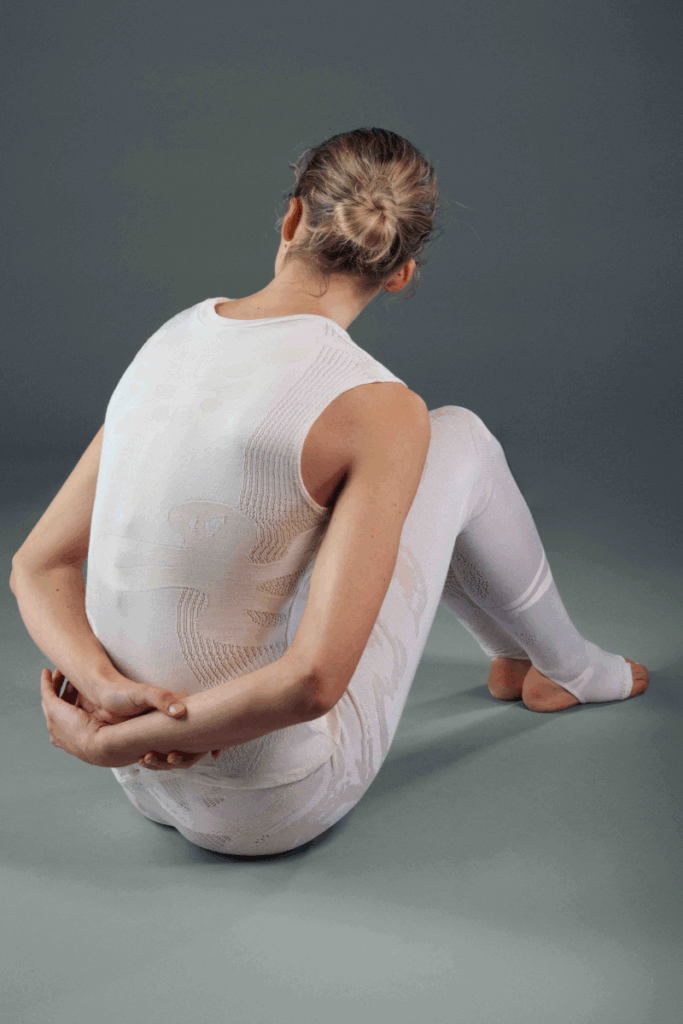
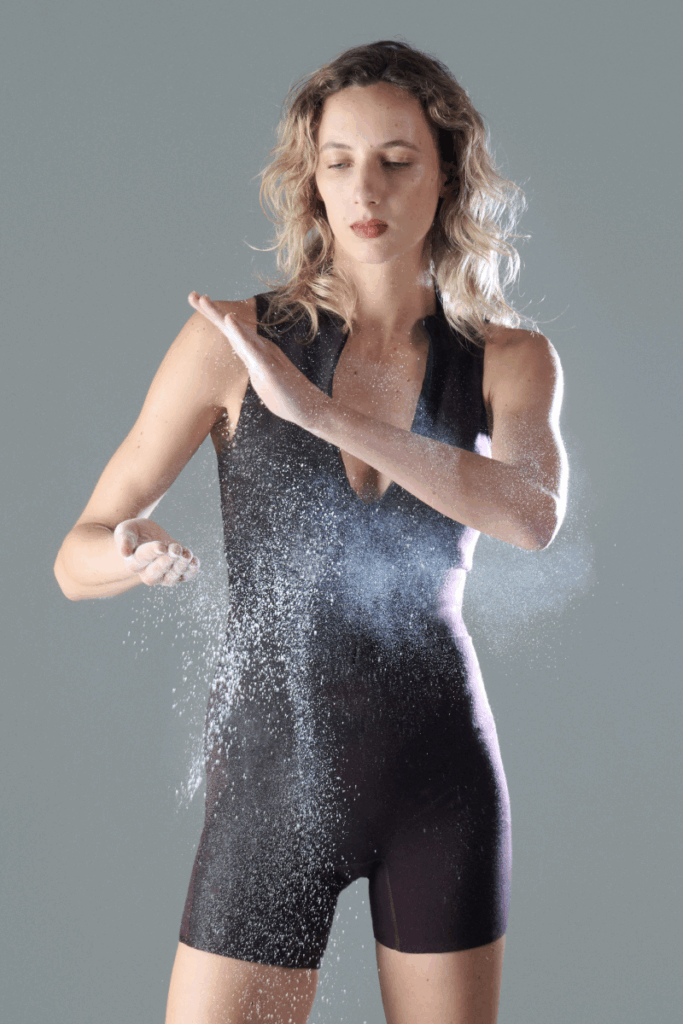
Skin Series lensed by Carla Rossi
Alongside this research you also founded Skin Series. What role does the brand play within your work?
While I was working in the lab, the research itself was not always very tangible from a design perspective. I wanted to create garments that would allow people to actually experience and better understand the technology. The Skin Series initially focused on bodysuits and T-shirts. Over time, however, I realized that other designers and brands were also interested in gaining access to healthier materials. As a result, the project expanded into developing fabrics that incorporate different kinds of beneficial or “active” ingredients.
I sometimes describe these materials in relation to skincare. Certain fibres naturally contain properties that interact with the body in interesting ways. We work with materials such as algae fibres, soy protein viscose, and silk, among others. Many of these fibres have long histories but are often overlooked in contemporary sportswear. Silk is a good example. In a recent collaboration with Eden Power Corp, we created silk–seaweed textiles designed for yoga or low-intensity exercise. Silk actually has a long history in sportswear. It was one of the earliest performance fabrics because it is strong, highly absorbent, and very comfortable. Today it is often perceived mainly as a luxury fabric, but historically it was not unusual to use silk for athletic garments.
So part of the work is really about rethinking materials. We tend to associate sportswear and activewear with synthetics because we assume synthetic means high performance, but that is not always the case.
Your practice seems to begin with materials rather than products.
Material always comes first. I develop fabrics by the meter, which can then be used in different ways. Sometimes I collaborate with other designers or create custom projects. I’ve also worked on costumes for dance and performance. My own product line remains quite small and stable. I don’t really work with seasonal collections. Instead, I occasionally introduce a new material, collaboration, or product when it makes sense.
Your work often returns to the relationship between the body, textiles, and health. Why is this connection so important?
I believe the skin and the textiles we wear should be considered together. Clothing is in constant contact with the body, yet we rarely think about how fabrics influence our skin or overall health. At the same time, our bodies also affect textiles through sweat, bacteria, and shed skin cells.
It is becoming more widely recognized that many garments—especially sportswear—contain various chemicals. These can include dyes, finishing agents, and sometimes substances such as formaldehyde or heavy metals used during production. Some research suggests that polyester and other plastics could potentially act as endocrine disruptors, although more evidence is still needed. At the very least, it raises the question of whether having synthetic materials in constant contact with our skin is ideal.

Do you think this approach could become more common within fashion and sportswear?
I think so. I’ve been working in this space for around seven years now, and there is definitely growing interest in health and wellness within textiles. At the same time, some of these ideas can become a bit gimmicky. For example, a brand might add something like hyaluronic acid to a textile while using polyester as the base material, which doesn’t necessarily address the larger issue.
That said, consumers are becoming more informed. People care about what they put next to their bodies, just as they care about what they eat or what they apply to their skin. Because of that, I do think this perspective will gradually become more standard, although there will likely always be both extremes within the industry.
Of course, we cannot solve every issue in a single project, but we can begin by becoming more aware of the materials we wear. My goal is not only to create textiles that are less harmful, but also textiles that could actually be beneficial for the body.
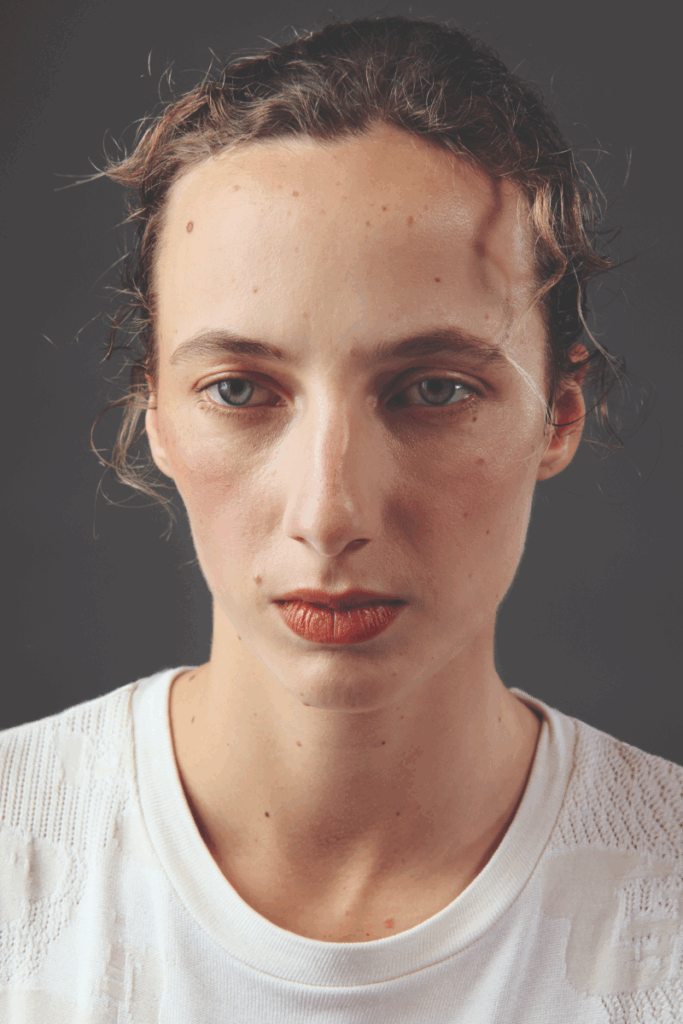
Skin Series lensed by Adrien De Hemptinne & Hugo Roger
Lastly, I’m curious about your perspective on craftsmanship. Do you think craftsmanship today can include scientific or research-based practices?
The approaches to science and fashion are different, yet they share some important similarities. In both fields, you begin with a concept, then design an experiment or process, develop a protocol, and eventually arrive at results.
In science, you work within clearer parameters that can be measured with great precision. However, when it comes to workflow, the two fields have much in common: both involve testing ideas, iterating on them, and refining the outcome over time.